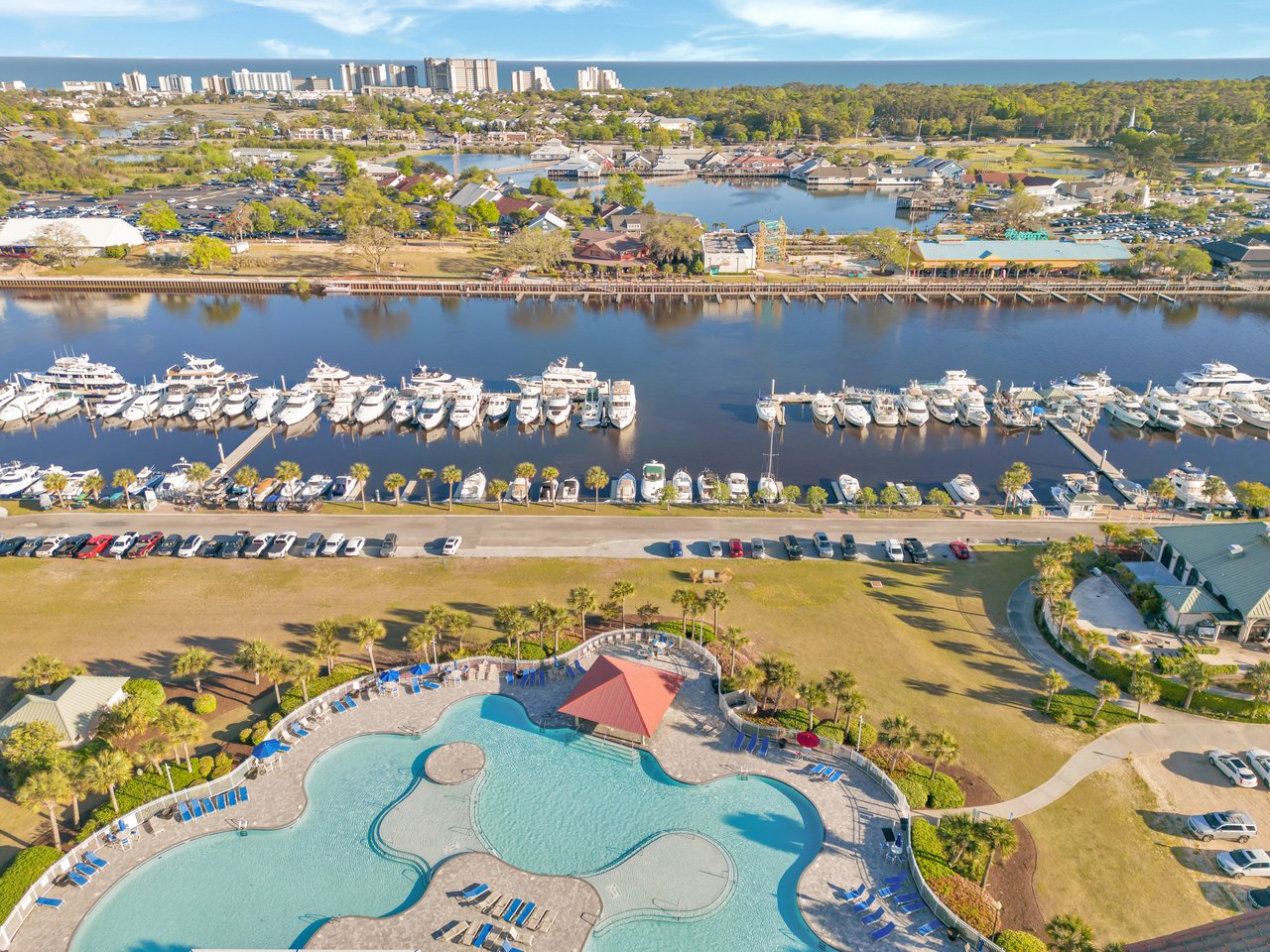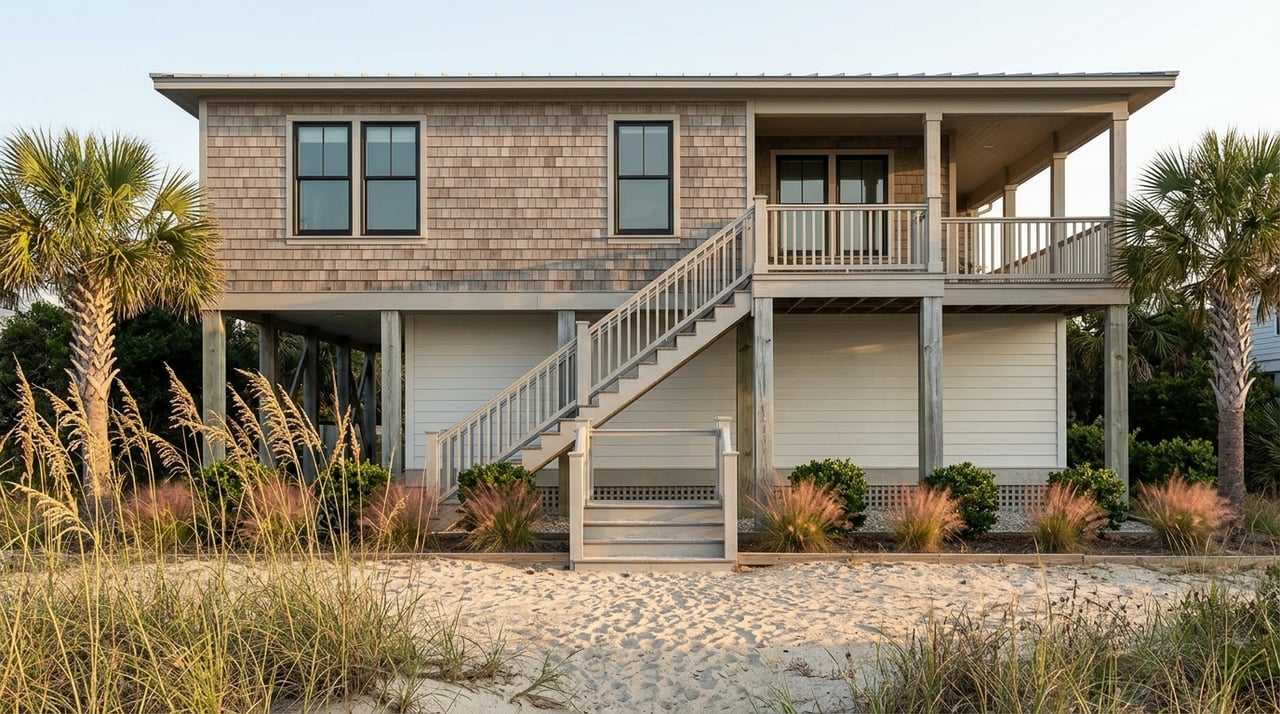
Walk north from the Cherry Grove Pier toward the Point on any evening this month and you'll feel it before you can explain it. The sand firms up, the dune line drops, and somewhere past the pier the beach starts behaving like it belongs to a different town. It doesn't. It belongs to the same stretch of Cherry Grove coastline you've always known. It's just being maintained by two completely different systems, on two completely different calendars, and the seam between them happens to run almost exactly through the middle of your walk.
That seam has a name, a boundary line, and a very specific reason it exists. Understanding it explains a lot about what you've been noticing on the beach this year.
Two beaches, one shoreline
Most of North Myrtle Beach spent late 2025 and early 2026 under the U.S. Army Corps of Engineers' Grand Strand renourishment project, a $72 million effort to pump sand back onto a coastline that Hurricanes Ian and Debby had chewed into. Reach 1, which covers North Myrtle Beach, was the first segment finished. Sand placement wrapped on January 31, 2026, and every public beach access in the city reopened with a wider, higher beach than residents had walked in years.
But the federal project didn't touch all of Cherry Grove. It stopped at 60th Avenue North, leaving the stretch from there up to the Cherry Grove Pier and on to Inlet Point, the sandbar locals call the Point, outside the scope of the work entirely. That's the line you're crossing on your walk. South of it, the beach was rebuilt with Corps-grade sand and Corps-level funding. North of it, the dune system has been left to whatever the city could manage on its own.
The gap isn't new, and it isn't an oversight. According to the Corps, Cherry Grove hasn't been part of a federal renourishment project since the initial work back in 1998. Compare that to the rest of the Grand Strand, which underwent a full renourishment cycle as recently as 2019 and typically gets one every seven to ten years. Cherry Grove has gone nearly three decades without the same federal attention the rest of the coastline receives on a routine schedule. The Corps' own position, stated when the city raised the issue, was that the natural dunes in the area were still providing adequate protection. Longtime residents have a different read on that.
"Protection of the sand dunes is really important because they've really been diminished here in the last couple of years, storms, we had some pretty bad severe weather," Cherry Grove resident Deborah Cox told a Grand Strand news crew in April.
The city's answer: sand it already had
Rather than wait for a future federal cycle to reach that far north, North Myrtle Beach built its own fix. On January 9, 2026, Mayor J. Baldwin announced the Tidewater Spoils Basin Restoration, a city-funded project using sand that had been stockpiled from a 2025 dredging operation rather than sand pumped fresh from offshore. The plan: truck that stockpiled material to the beach and use it to rebuild the dune line specifically between the Cherry Grove Pier and the Point, as material allows.
Crews broke ground in early April 2026, and the project is structured differently from what you may have watched happen a few blocks south. The federal renourishment widened the beach itself, adding sand to the shoreline in front of the dunes. The Tidewater project is narrower in purpose. It's rebuilding the dune wall, the actual barrier of sand and sea oats that takes the first hit when a storm surge comes ashore, rather than widening the beach in front of it.
Here's the sequence, in order:
- January 9, 2026 — City announces the Tidewater Spoils Basin Restoration to cover the gap north of 60th Avenue
- January 31, 2026 — Federal renourishment finishes in North Myrtle Beach, reopening all accesses south of the gap
- Early April 2026 — Dune rebuilding crews begin work between the pier and Inlet Point using stockpiled material
If you've walked that stretch recently and noticed equipment, new sand that doesn't quite match the color of the rest of the beach, or dune fencing going up in sections that didn't have it before, that's the Tidewater work in progress rather than a second wave of the federal project. It's a smaller, city-run operation working with whatever sand is on hand, which is also why it's proceeding in patches instead of one continuous sweep like the federal work did.
Why the two systems don't sync up
It's worth sitting with why this split exists instead of treating it as bureaucratic noise. A federal renourishment project runs on federal funding cycles, federal environmental review, and a schedule set by where the Corps decides erosion is worst along the entire 26-mile Grand Strand study area. Cherry Grove's northern tip, tucked behind the inlet and away from the more heavily trafficked sections of beach, has historically ranked lower on that list. The city, watching its own dune line erode faster than the calendar allowed for federal help, decided not to wait.
That's the actual story here, and it's a more useful one than "the beach got renourished." One stretch of Cherry Grove is now protected by a system built for the whole 60-mile coastline and funded at a federal scale. The other stretch, arguably the more fragile one given how narrow the dune system gets near the Point, is protected by whatever sand the city happened to have stockpiled from a dredging job. Both are legitimate coastal management. Neither is guaranteed to run on the same timeline again.
What you'll actually see on the beach this fall
If your routine takes you past the pier toward the Point, a few things to expect over the coming weeks. New dune fencing is going in along sections of the restored area, part of the standard practice of holding sand in place while sea oats take root. Expect updated signage too, the standard reminders to stay off the dunes while the system reestablishes itself. None of this closes the beach. It just marks off narrower sections where the sand is doing the work of becoming a dune again rather than a walking path.
The pier itself keeps running through all of it. Driftwood Restaurant and Bar, right at the end of the Cherry Grove Pier, stays open through the fall, and the pier's fall stretch is when the crowds thin out and multiple fishing tournaments cycle through, a quieter version of the same pier that's packed shoulder to shoulder every July. If you'd rather walk than fish, Heritage Shores Nature Preserve at the end of 56th Avenue North sits almost directly in the middle of the gap zone, close enough that the dune work happening on the beach connects to the same marsh and maritime forest system the preserve protects on the inland side.
None of this is dramatic. It's slower and quieter than the federal project, which is exactly why it's easy to miss unless you already live here and walk this stretch often enough to notice the sand looking different from one week to the next.
The takeaway for anyone who calls this stretch home
The next time you're on the beach and the dune line suddenly looks thinner, or the fencing appears out of nowhere, you'll know it's not neglect and it's not a delay in the same project you watched finish in January. It's a second, smaller effort with its own funding source, its own timeline, and its own boundary at 60th Avenue North. Cherry Grove's beach is being cared for in two different ways at once, and knowing where one system ends and the other begins is the difference between wondering what's going on and actually understanding your own neighborhood.
For updates on the city's progress, the official beach renourishment page at nmb.us is the most reliable source, and it's worth checking before assuming any given stretch is open or restricted.
If you're already part of this community and want a local perspective on anything else happening around Cherry Grove or the wider Grand Strand, Kristen Lundy is always glad to talk shop, whether it's real estate related or just what's changing in the neighborhood. Let's Connect.