If you have been looking at Carolina Forest and wondering whether it is one neighborhood or something much bigger, you are not alone. The area can feel a little hard to define at first, especially if you are relocating, buying a second home, or comparing it to other Grand Strand communities. This guide will help you understand how master-planned living in Carolina Forest actually works, what daily life tends to look like, and what to watch for before you buy. Let’s dive in.
What Carolina Forest Really Is
Carolina Forest is best understood as a large master-planned residential district, not a single subdivision. Horry County describes it as a community that began as a master-planned area in the late 1990s, covers about 15 square miles, and includes 26 major residential subdivisions.
That scale matters when you start your home search. Two homes with a Carolina Forest address may offer very different lifestyles, price points, amenities, and HOA structures depending on the neighborhood.
Horry County also identifies Carolina Forest as one of the most populous and fastest-growing communities in unincorporated Horry County. Census QuickFacts reported 23,342 residents in 2020, along with a 69.6% owner-occupied housing rate.
Why The Master-Planned Setup Matters
In a master-planned area, the big picture is intentional. Roads, residential sections, recreation, and everyday convenience are organized to work together, even though each neighborhood may still have its own rules and identity.
In Carolina Forest, that planned layout shows up most clearly in its road network and community amenities. Horry County transportation documents point to Carolina Forest Blvd, River Oaks Dr, and International Dr as major corridors that shape how people move through the area.
This kind of setup appeals to many buyers because it can create a more organized living experience. You are often choosing not just a home, but also a pattern of daily life built around neighborhood amenities, road access, and shared standards.
What Daily Life Looks Like
Daily life in Carolina Forest often centers on residential comfort, recreation, and convenience, rather than direct oceanfront living. This is more of an inland Grand Strand base with access to beaches, shopping, dining, and golf through the area's road system.
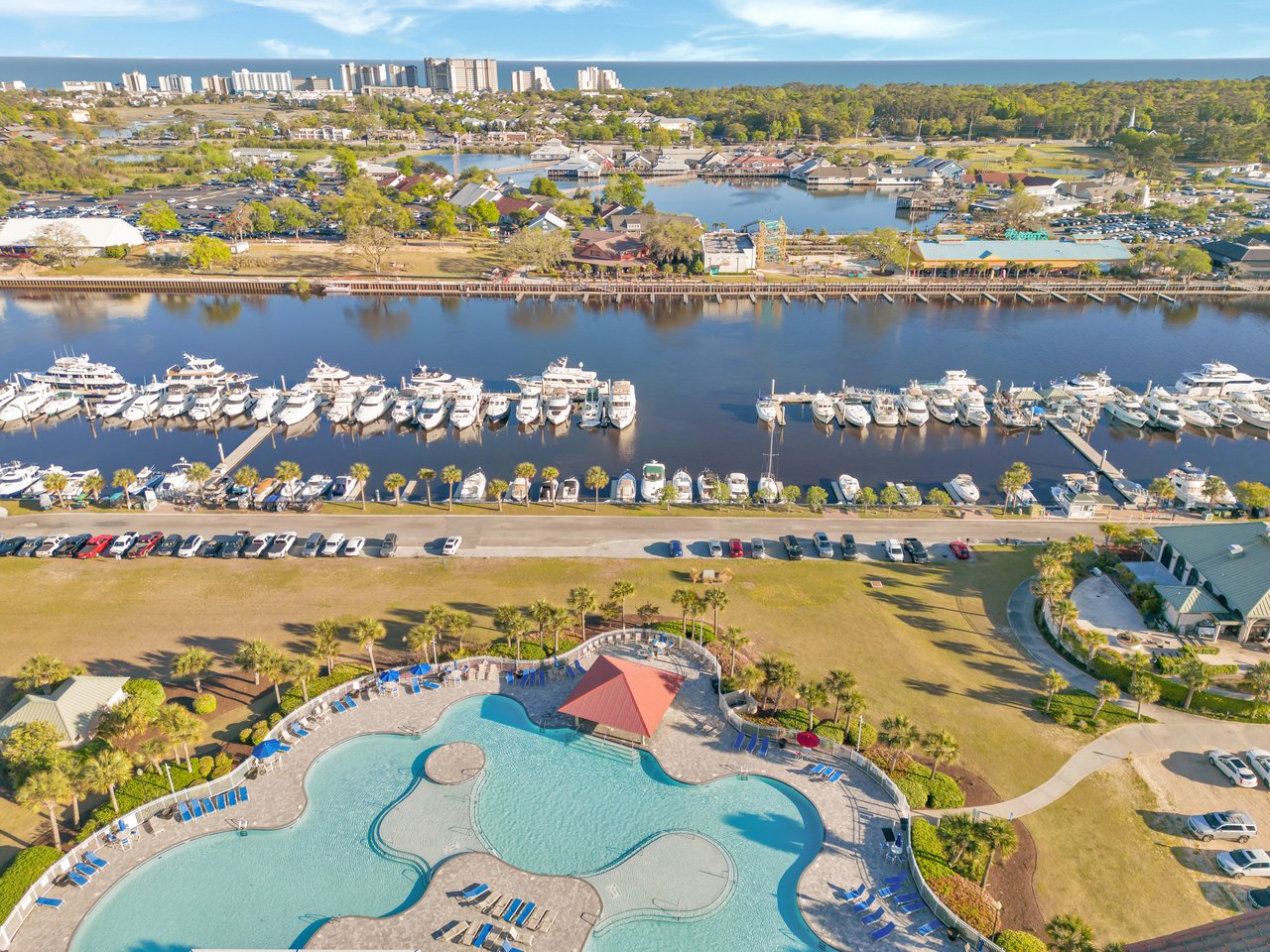
A neighborhood like Plantation Lakes shows the amenity-rich side of the Carolina Forest lifestyle. According to its property owners association, the community includes 15 miles of lake, two pools, tennis courts, basketball, horseshoe pits, a clubhouse with a gym, and the ability to stroll or bike throughout the 748-home and lot community.
Public recreation also plays a role in everyday living. Horry County's Carolina Forest Recreation Center includes a full gymnasium, fitness room, multipurpose room, locker rooms, kitchen, and rock climbing wall, while the adjacent Palmetto Adventure Land Playground is a popular local recreation spot.
For many buyers, that combination is the draw. You get a community-focused setting with built-in recreation and practical access to the rest of the Grand Strand.
Amenities Can Vary By Neighborhood
One of the biggest misconceptions about Carolina Forest is that every section offers the same lifestyle. In reality, amenities can vary a lot from one neighborhood to another.
Some communities lean more toward custom homes and a more upscale feel, while others may offer townhome living with a simpler ownership structure. For example, Plantation Lakes is positioned as a community of unique luxury custom homes, while Townes at Carolina Forest is a townhome community with 2 to 4 bedrooms, 2.5 baths, more than 1,600 square feet, one garage, and HOA fees of $150 per month.
That range can be helpful if you want options. It also means you should evaluate each neighborhood on its own terms instead of assuming the wider Carolina Forest name tells you everything.
HOA Living Is A Major Factor
If you are considering Carolina Forest, it is important to go in expecting that HOA governance is often part of the lifestyle. The Carolina Forest Civic Association notes that its HOA committee works with numerous and various homeowner associations across the area, which shows that rules are neighborhood-specific.
In other words, there is no single area-wide HOA controlling all of Carolina Forest. Each community may have its own dues, approvals, restrictions, and expectations.
That can affect everything from your monthly costs to how much flexibility you have with your property. Buyers should review each neighborhood's governing documents carefully before making a decision.
What HOA Rules May Cover
In some Carolina Forest communities, design review is fairly detailed. Plantation Lakes' ARB guidelines require approval before construction, changes, additions, landscaping, or lot alterations begin.
Those guidelines also address construction hours, job-site cleanliness, contractor activity, fences, screening, tree removal, flagpoles, satellite dishes, and boat slips or bulkheads. That does not mean every Carolina Forest neighborhood follows the same model, but it gives you a realistic picture of the level of oversight you may find in HOA-governed sections.
For the right buyer, those rules help protect appearance and consistency. For others, they may feel restrictive, so it is worth thinking about your comfort level early in the search.
Getting Around Carolina Forest
Transportation is a big part of the Carolina Forest conversation. Because the area is built around major corridors, your experience often depends on where you live in relation to Carolina Forest Blvd, River Oaks Dr, International Dr, and U.S. 501.
Horry County transportation documents identify recurring congestion at U.S. 501 and Carolina Forest Blvd. The county also ties the current SC 31 interchange project to the original master plan, which shows that road access has long been central to how the community functions.
For many buyers, this is one of the main tradeoffs to weigh. Carolina Forest offers inland convenience and a planned residential setting, but you should still think carefully about traffic patterns, commute routes, and how often you will be driving to work, the beach, or other parts of the Grand Strand.
Census QuickFacts lists the mean travel time to work at 22.0 minutes for the 2020-2024 period. That provides a useful baseline, but your own drive can vary depending on your exact neighborhood and destination.
Schools And Civic Infrastructure
Carolina Forest is not just a collection of homes. It also has a broader civic structure that supports daily life.
The Carolina Forest Civic Association represents residents, businesses, and organizations across the greater community. Its public safety committee has specifically pushed for bike paths along Carolina Forest Blvd, which reflects the area's ongoing focus on walkability, greenways, trails, and bikeways.
For school planning, Horry County Schools lists Carolina Forest Elementary at 285 Carolina Forest Blvd with Carolina Forest as its attendance area, and Carolina Forest High at 700 Gardner Lacy Rd with the same attendance area. If schools are part of your decision, it is smart to confirm attendance by address during your home search.
Natural Setting And Real-World Tradeoffs
One reason some buyers like Carolina Forest is its more wooded and natural feel compared with denser urban areas. That setting can make the community feel more peaceful and residential.
At the same time, nature comes with a few practical considerations. The Carolina Forest Civic Association has shared black bear awareness guidance for residents, and Horry County has issued controlled-burn and temporary road-closure notices for International Drive as part of land-management work.
That does not make the area unusual for this part of South Carolina, but it does mean you should expect the occasional wildlife or smoke and traffic management issue. It is part of understanding the setting honestly, not just the sales pitch.
Is Carolina Forest Right For You?
Carolina Forest tends to fit buyers who want a planned-community lifestyle with inland convenience, neighborhood amenities, and access to the larger Grand Strand by road. It can be especially appealing if you want choices across housing types, from townhomes to custom homes, and if community features matter to your day-to-day life.
It may be a less natural fit if your top priority is being able to walk straight to the beach or avoid HOA structure altogether. The better question is not whether Carolina Forest is good or bad. It is whether its mix of amenities, governance, road-based access, and neighborhood variety matches the way you want to live.
If you are comparing communities in Carolina Forest or trying to narrow down which neighborhood best fits your goals, working with someone who knows the Grand Strand can help you cut through the noise. For personalized guidance on Carolina Forest and nearby coastal communities, connect with Kristen Lundy.
FAQs
What does master-planned living in Carolina Forest mean?
- It means Carolina Forest functions as a large, coordinated residential area with multiple subdivisions, shared road corridors, recreation assets, and neighborhood-specific HOA structures rather than one single subdivision.
Are all Carolina Forest neighborhoods the same?
- No. Carolina Forest includes a range of housing types and neighborhood setups, so amenities, home styles, HOA dues, and rules can vary significantly by community.
What should buyers know about HOAs in Carolina Forest?
- Buyers should know that many neighborhoods have their own HOA or architectural review requirements, and rules may cover property changes, landscaping, exterior features, and other use standards.
How is commuting in Carolina Forest, South Carolina?
- Commuting is largely road-based, with Carolina Forest Blvd, River Oaks Dr, International Dr, and U.S. 501 serving as key routes, and county documents note recurring congestion at U.S. 501 and Carolina Forest Blvd.
Is Carolina Forest close to the beach?
- Carolina Forest offers access to beaches and other Grand Strand destinations, but it is better described as an inland residential base than a beachfront community.
What kinds of homes are available in Carolina Forest?
- The area includes a variety of housing options, including townhomes and custom homes, depending on the neighborhood you choose.