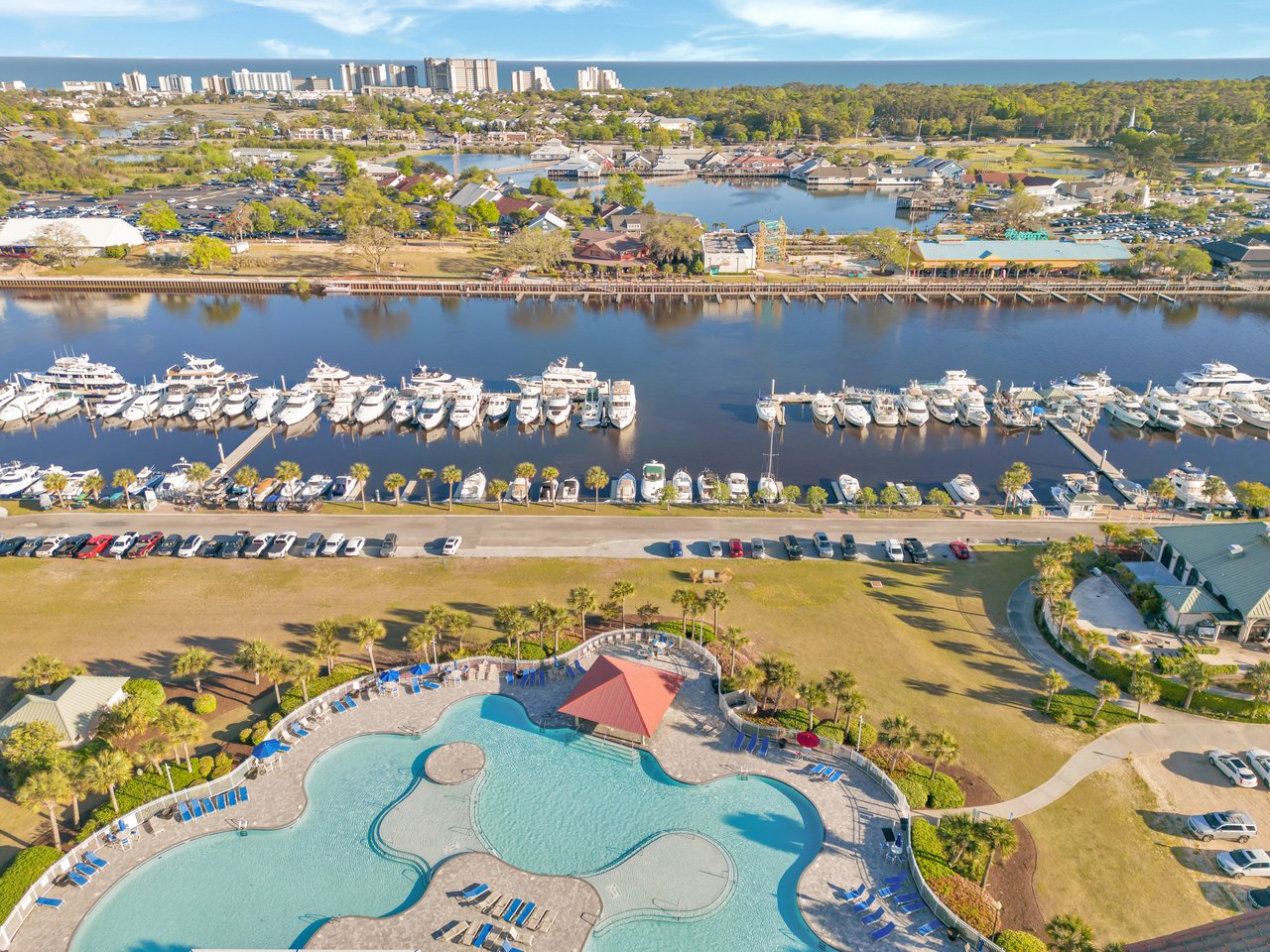
Selling in Horry County can feel simple at first glance, until you realize the county does not move like one market. A condo in Myrtle Beach, a house in North Myrtle Beach, and a home in Conway can all attract different buyers, face different competition, and sit on the market for different lengths of time. If you want to sell with confidence, it helps to understand how coastal and inland areas compare and what that means for your pricing and marketing plan. Let’s dive in.
Why Horry County Acts Like Several Markets
Horry County is large, growing, and made up of distinct submarkets. The U.S. Census Bureau estimated the county population at 427,551 as of July 1, 2025, which is up 21.8% from the 2020 census base. The same data shows 77.3% of housing units are owner-occupied, and 29.9% of residents are age 65 or older.
For sellers, that matters because the buyer and seller pool is broad. You may be competing for attention from retirees, downsizers, local move-up buyers, second-home shoppers, and incoming residents. That variety is one reason countywide averages often miss the real story.
The Grand Strand also brings in a major visitor economy. Visit Myrtle Beach reports more than 17 million visitors annually across 14 communities, along with roughly 425 hotels and 157,000 accommodation units. That helps explain why many coastal properties appeal to a mix of primary-residence, second-home, and investment-minded buyers.
Coastal Markets: Higher Prices, Different Pressure
Coastal areas often command stronger pricing, but that does not automatically make them easier markets for sellers. The local MLS data shows that coastal price points vary a lot by area, and time on market can still stretch well past 100 days.
In March 2026 year-to-date data, North Myrtle Beach single-family homes had a median sales price of $560,000 and 119 days on market. Myrtle Beach single-family homes were at $537,000 and 135 days on market. Surfside Beach came in at $410,000 and 123 days, Garden City and Murrells Inlet at $455,000 and 134 days, and Pawleys Island and Litchfield at $637,875 and 135 days.
Those numbers show an important point: “coastal” is not one price bracket. A seller in Pawleys Island or Litchfield is entering a different pricing conversation than a seller in Surfside Beach, even though both fall within the broader coastal story.
Coastal condos face heavier competition
Condos are a major part of the coastal market, and inventory levels are much higher in some beach areas. That usually means buyers have more options, which can make pricing discipline even more important.
Myrtle Beach had 1,475 condo listings with a year-to-date median sales price of $195,000 and 143 days on market. North Myrtle Beach had 634 condo listings, a $317,000 median, and 130 days on market. Surfside Beach had 177 condo listings, a median of $178,150, and 123 days on market.
If you are selling a condo near the coast, this is where details matter. Buyers may compare your property against many similar options, so your price, presentation, and positioning need to be especially sharp.
Coastal buyers may shop differently
Tourism helps shape the coastal buyer pool. Visit Myrtle Beach describes the area as appealing to families, large groups, luxury travelers, couples, culinary visitors, and adventure seekers. For sellers, that supports the idea that some coastal buyers may be focused not just on the home itself, but also on access, convenience, amenities, and how the property fits a beach-oriented lifestyle.
That does not mean every coastal buyer wants the same thing. A primary homeowner, a second-home buyer, and an investor may all evaluate the same listing differently. Your marketing should speak clearly to the most likely buyer for your property type and location.
Inland Markets: Value, Variety, and Local Demand
Inland and outer-corridor markets often offer lower or more moderate price points than the coast, but they are not all alike. Some areas lean more value-driven, while others approach near-coastal pricing because of location and demand.
Conway single-family homes posted a year-to-date median sales price of $308,279 with 144 days on market and 803 homes for sale. Loris and Longs were at $290,000 with 132 days on market and 568 homes for sale. Socastee was at $360,000 with 121 days on market, while Carolina Forest reached $475,400 with 135 days on market and 266 homes for sale.
These differences matter because inland sellers are not competing in one broad bucket. A home in Carolina Forest may require a different strategy than a home in Conway or Loris, even if both are outside the immediate beach areas.
Inland condo sellers still need strategy
It is easy to assume condo competition is mostly a coastal issue, but inland condo sellers should also plan for a careful launch. Conway condos had a year-to-date median sales price of $220,000 and 148 days on market. Loris and Longs condos were at $249,750 and 142 days on market.
That tells you slower absorption is not limited to oceanfront or near-beach inventory. If you are selling an inland condo or townhome-style property, pricing and presentation still play a big role in how quickly buyers respond.
Inventory changes vary by area
One of the most important seller takeaways is that inventory growth is not the same across inland submarkets. Year to date, new listings in Conway were up 2.4%, while Loris and Longs were up 42.2%. Carolina Forest moved the other direction, with new listings down 20.9% year to date.
This is exactly why countywide averages can mislead sellers. If inventory is rising quickly in your area, buyers may feel less urgency. If inventory is tighter, your home may stand out more, especially if it is priced well and presented professionally.
What Sellers Should Do With This Data
The biggest lesson is simple: sell by submarket, not by county headline. Your strategy should reflect your exact area, property type, and price band.
Use local comps, not county averages
A countywide average can blur major differences between North Myrtle Beach, Myrtle Beach, Surfside Beach, Conway, Carolina Forest, and Pawleys Island or Litchfield. Those markets sit at different median prices and move at different speeds. If you price from the wrong data set, you risk either leaving money on the table or missing the market.
A smart seller starts with recent, nearby, like-kind comparisons. That means looking closely at your ZIP code, neighborhood, property type, and current competition.
Price with discipline from day one
Overpricing can be costly in both coastal and inland markets, but it can be especially risky where condo supply is higher or buyer choice is broader. The longer a home sits, the more buyers may wonder whether something is off, even when the issue is simply price.
Launching at a realistic number gives you a better chance to capture attention early. That early window matters because new listings often get the strongest buyer interest first.
Match the marketing to the buyer
Different Horry County markets call for different listing emphasis. In coastal areas, buyers may focus more on beach access, parking, amenities, association details, and any HOA or rental constraints that affect use. Inland buyers may place more weight on condition, lot utility, daily convenience, and overall value.
That does not mean using generic marketing for either group. It means presenting the features that matter most to the likely buyer for your location and property type.
Plan your next move separately
If you are also buying in the Grand Strand after you sell, do not assume your sale and purchase will move at the same pace. Coastal condo inventory, detached-home inventory, and inland inventory each behave differently. Your purchase timeline should be based on the specific area you want to move into, not just the area you are leaving.
This is especially important for downsizers, retirees, and local seller-movers who want to avoid feeling rushed. A clear plan can help you protect both your sale and your next purchase.
Why Tailored Guidance Matters
Horry County gives sellers real opportunity, but it also asks for precision. A beach-area condo with heavy competition needs a different approach than a higher-end coastal home, and both need a different plan than an inland primary residence.
That is where local, market-specific guidance becomes valuable. When your pricing, presentation, and marketing are built around your actual submarket instead of a broad county narrative, you put yourself in a much stronger position.
If you are thinking about selling in North Myrtle Beach or anywhere in the Grand Strand, working with an agent who understands both coastal and inland dynamics can help you move with more clarity and less stress. When you are ready for a personalized strategy, connect with Kristen Lundy.
FAQs
How do coastal and inland Horry County markets differ for sellers?
- Coastal markets often show higher price points and stronger lifestyle-driven appeal, while inland markets tend to be more value-sensitive and primary-residence oriented. Both can vary widely by ZIP code, property type, and inventory level.
What is the median price for coastal single-family homes in Horry County areas?
- March 2026 year-to-date local MLS data showed median single-family prices of $560,000 in North Myrtle Beach, $537,000 in Myrtle Beach, $410,000 in Surfside Beach, $455,000 in Garden City and Murrells Inlet, and $637,875 in Pawleys Island and Litchfield.
Are Horry County coastal condos more competitive to sell?
- Yes. Coastal condo inventory is notably higher in some beach markets, including 1,475 condo listings in Myrtle Beach and 634 in North Myrtle Beach, which can create more competition and greater sensitivity to pricing.
What are inland Horry County home prices like for sellers?
- March 2026 year-to-date local MLS data showed median single-family prices of $308,279 in Conway, $290,000 in Loris and Longs, $360,000 in Socastee, and $475,400 in Carolina Forest.
Why should Horry County sellers use submarket comps?
- Horry County does not behave like one market. Different areas have different price levels, inventory counts, and days on market, so using nearby comparable sales is more reliable than relying on countywide averages.
What should sellers highlight in a Horry County listing?
- That depends on the property and location. Coastal listings should usually focus on features like access, amenities, parking, and association details, while inland listings often benefit from emphasizing condition, utility, convenience, and value.